top of page



Language

Y Tu Hwnt i Amheuon Rhesymol


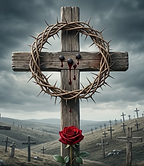


58% believe you can earn Heaven by being good

A Departure from Tradition
From the polished stage of Grace Fellowship, Pastor Thomas preached an effortless gospel: the ancient commandments were obsolete, Yeshua had kept them so believers wouldn’t have to, and grace meant total freedom from the biblical Law.
In the fourth row sat David, clutching his Bible. After months of studying the Scriptures from cover to cover without denominational lenses, the cracks in that modern theology had become glaringly clear.
David recalled the warning in 2 Peter 3:15–17: Paul’s deep, complex writings would be distorted by the untaught into the "error of the lawless." Modern pulpits had reduced Paul’s defense of justification by faith into a rejection of God’s instructions. They ignored that Paul explicitly affirmed, “Do we then make void the law through faith? God forbid: yea, we establish the law” (Romans 3:31), and that he publicly observed Torah rites to prove he walked in obedience (Acts 21:24).
After the service, David confronted Pastor Thomas at the door.
"Pastor, in Matthew 5:17–19, Yeshua said He did not come to destroy the Law, and that anyone who breaks the least commandment and teaches others to do so will be called least in the kingdom," David said. "John also defines sin as transgression of the Law (1 John 3:4). If the Law is abolished, how can sin even exist?"
Thomas offered a practiced, patronizing smile. "David, you're falling into legalism. That was for the Jews under the Old Covenant. Yeshua redeemed us from the Law; we are under grace now."
"With respect, Pastor," David answered steadily, "Paul wrote that Yeshua redeemed us from the curse of the Law—death—not the Law itself (Galatians 3:13). Colossians 2:14 says our record of debt was nailed to the cross, not the Father's statutes. And Jeremiah prophesied that under the New Covenant, God would write His Torah on our hearts, not discard it (Jeremiah 31:33)."
Unwilling to engage, Thomas grew guarded. "If you preach keeping the Sabbath and Old Testament ordinances, you’ll confuse the flock. We preach the simple Gospel. We'll have to agree to disagree."
Walking out into the afternoon sun, David looked back at the grand sanctuary. He realized that the wide path of tradition offered comfort without conviction, fulfilling Paul’s warning that men would turn from truth to fables to satisfy "itching ears" (2 Timothy 4:3–4). The road ahead would be narrow and solitary, but David had found his footing: true faith does not abandon God's commandments; it walks in covenant obedience through Yeshua.
Biblical Commandments Frequently Overlooked by Mainstream Christianity
When measured against the plain text of Scripture, several categories of biblical commands are routinely set aside in favor of church tradition:
The Decalogue (Ten Commandments)
The Seventh-Day Sabbath: The fourth commandment ordains the seventh day (Friday evening to Saturday evening) as a perpetual rest and holy convocation (Exodus 20:8–11). Tradition replaced this with Sunday observance.
Graven Images and Idolatry: The second commandment forbids fashioning or bowing before images for veneration (Exodus 20:4–6)—a practice prevalent in many historic traditions.
Foundational Torah Ordinances
Biblical Dietary Laws: Leviticus 11 and Deuteronomy 14 distinguish clean from unclean animals (e.g., prohibiting pork and shellfish) as an enduring mark of holiness.
The Biblical Feasts (Appointed Times): Leviticus 23 outlines God's eternal festivals (Passover, Unleavened Bread, Feast of Weeks/Pentecost, Trumpets, Day of Atonement, and Tabernacles). These were largely abandoned in favor of man-made holidays like Christmas and Easter.
Tassels (Tzitzit): Numbers 15:37–40 commands believers to wear fringes as a physical reminder to remember and obey all of the Lord's commandments.
Explicit New Testament Instructions
Upholding the Torah: Yeshua explicitly stated that not the smallest stroke of the Law would pass away while heaven and earth remain (Matthew 5:18).
Apostolic Decree on Food: The Jerusalem Council in Acts 15:20, 29 strictly commanded Gentile converts to abstain from meats offered to idols, from blood, and from things strangled.
Walking as He Walked: Scripture defines loving God as keeping His commandments (1 John 5:3) and states that anyone claiming to abide in Yeshua must walk as He walked (1 John 2:6)—which was in complete, sinless obedience to the Father's Law.
bottom of page